Same Room, Different Rules: Mediating Attendance at Family Milestones After Separation
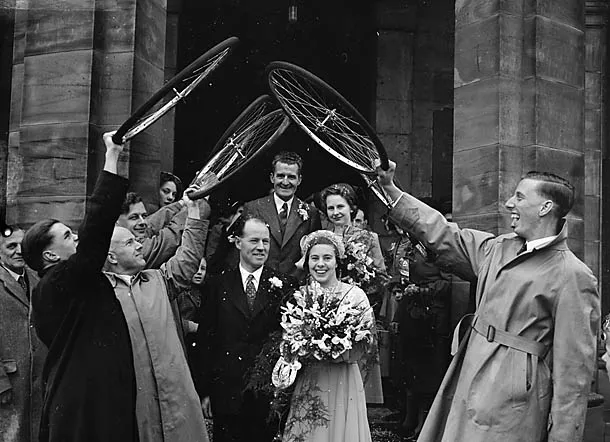
Photo: Geoff Charles, CC0, via Wikimedia Commons
Family separation changes the ordinary rhythm of contact: weekends, school runs and holiday rotas can be planned, reviewed and written down. Milestone events are different. A wedding, funeral, baptism, christening or significant birthday often arrives with its own emotional weight, its own guest list and its own expectations from extended family. For separated parents in Greater Manchester, the practical question is not simply whether both will attend. It is how they will attend, who will accompany them, where they will sit, what role the children will play and how the day will end without a scene that children remember for the wrong reasons.
Mediation is well suited to this territory because it separates the event from the relationship. The aim is not to manufacture warmth or to rewrite family history. It is to create a workable protocol for a defined occasion, so that adults can manage their own discomfort and children are not asked to manage it for them.
Why milestones resist ordinary contact arrangements
A parenting plan may cover school holidays and changeover times, but it rarely covers the seating plan at a city-centre wedding or the protocol for a funeral that has not yet happened. Milestones are usually one-off, highly visible and organised by someone else. The invitation may come from a grandparent, a cousin or a family friend who does not fully understand the separation. Relatives may have strong views about who should be present, who should be introduced to whom and whether a new partner should attend.
These events also place children in a public setting. A child may be a bridesmaid, a pageboy, a reader, a coffin-bearer or simply a guest who is watching the adults closely. The child may feel responsible for keeping the peace, or may worry about showing affection to one parent in front of the other. Mediation can help parents anticipate those pressures and agree a unified message before the day arrives.
Start with the event, not the history
A useful mediation session begins with a plain inventory of the occasion. What is the event? Who is hosting it? Who has been invited? Is the invitation addressed to one parent, to both parents, to the children, or to a household that no longer exists in the same form? Are there religious or cultural expectations about attendance? Is travel or overnight accommodation involved? Will alcohol be served? Are there speeches, photographs or receiving lines where seating and proximity matter?
From that inventory, parents can identify which decisions genuinely belong to them and which belong to the host. They cannot control every element of a wedding or funeral, but they can control their own responses, their arrival times, their choice of companion, their conduct and their exit. Mediation helps draw that line clearly.
Agreeing plus-one boundaries
The question of a new partner is often the most sensitive. A parent may feel that attending alone is a concession; another may feel that the presence of a new partner is disrespectful or premature. Mediation does not decide whether a relationship is serious enough to warrant an invitation. It focuses on the practical and child-centred considerations: whether the children have met the new partner, whether the event is likely to be emotionally charged, whether the host has expressly included plus-ones and whether a first introduction should take place at a family funeral.
A workable agreement might distinguish between different types of event. A large wedding with a formal invitation to both parents and their partners may require one approach. A small family funeral, where the children are grieving and the extended family is fragile, may require another. The important point is that the boundary is discussed in advance rather than tested in public.
Roles for children and protection from divided loyalties
Children often want to take part in family milestones, but they should not be made responsible for adult relationships. Parents can agree that a child will not be asked to choose who to sit with, who to walk with or who to greet first. If a child has a formal role, both parents can agree to support it without competing for credit. If photographs are being taken, parents can agree a sequence that includes the child with each parent separately and, where appropriate, a neutral group arrangement that does not force an uncomfortable pose.
It also helps to agree what the child will be told beforehand. A short, shared explanation is usually better than two different versions. Something along the lines of both parents attending, each being responsible for their own arrangements, and the child being free to enjoy the day without carrying messages, is often enough. The wording should suit the child’s age, but the principle is consistent: the adults have made a plan so the child does not have to.
Seating, sightlines and the exit plan
Seating is not a trivial matter at a wedding or a funeral. It determines who is seen with whom and how easily a parent can leave a difficult conversation. Where the host is willing, parents can ask for separate tables or for seating that avoids a direct face-to-face arrangement across a narrow aisle. At a funeral, the priority may be the children’s access to both parents and to other grieving relatives rather than adult comfort.
An exit plan is equally practical. Parents can agree arrival times, departure times and a signal for stepping away if a conversation becomes strained. If children are travelling with one parent, the other should know the plan in advance. If the event is in Manchester city centre and involves a late finish, transport arrangements should be settled before the day rather than negotiated in a car park.
A simple protocol for Manchester families
Mediation can produce a short written protocol covering attendance, plus-ones, children’s roles, seating, photography, social media, gifts, costs, travel and departure. It need not be rigid. It should include a review point for events that are still some months away, and a fallback position for funerals or emergencies where there is little time to plan.
The protocol should also identify who communicates with the host. Ambiguous messages passed through children or relatives are a common source of conflict. A named adult, or a short agreed email, is usually safer.
Milestones will always carry emotion. Mediation cannot remove that, and it should not try. What it can do is give separated parents a dignified framework for sharing a room without asking their children to referee the occasion. In Manchester and across Greater Manchester, that framework is often the difference between an event that children remember with relief and one they remember with anxiety.